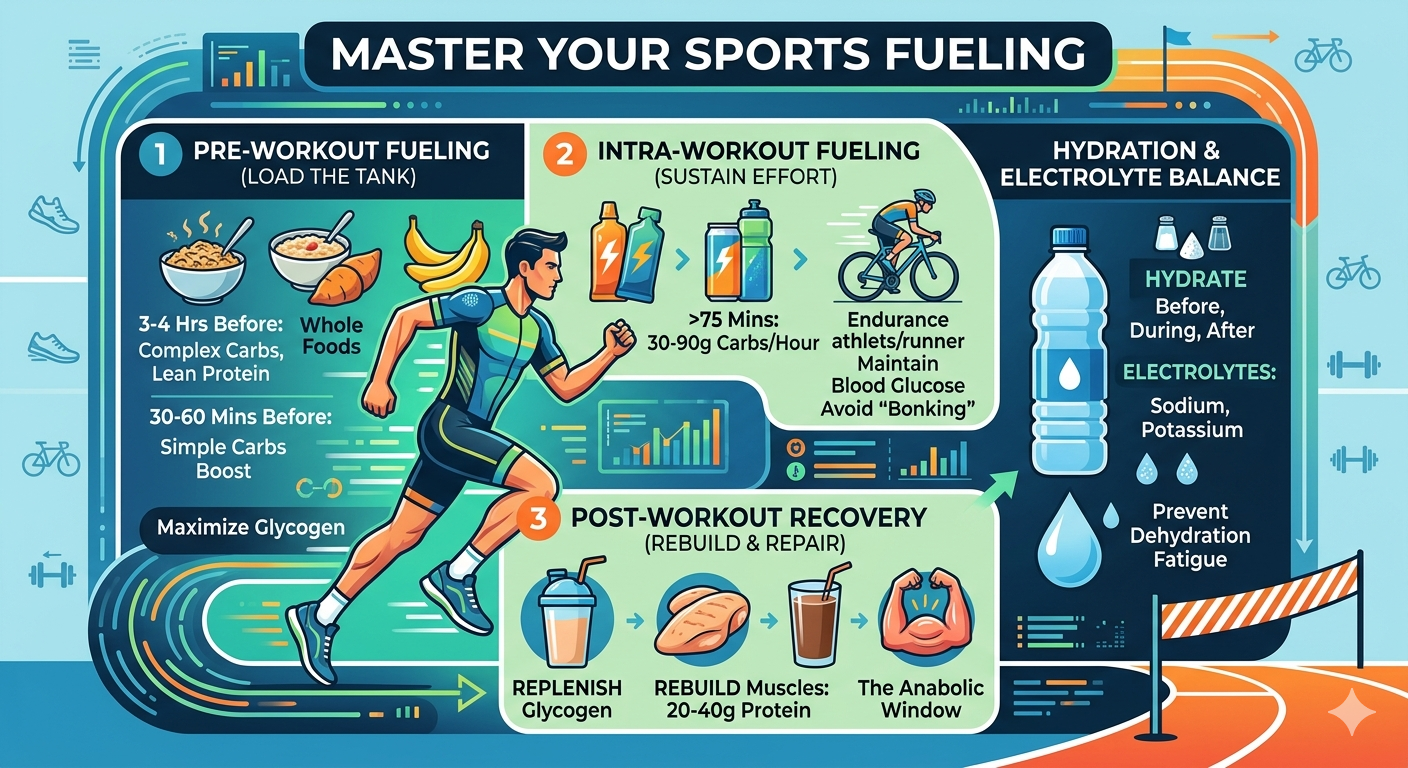
Sports Fueling,In the modern era of athletics, the margin between victory and defeat is often measured in milliseconds and millimeters. To bridge this gap, elite athletes no longer rely solely on grit and training; they lean heavily on the science of sports fueling.
Sports fueling is the strategic application of nutrition and hydration to optimize energy levels, improve endurance, and accelerate muscle repair. It isn’t just a diet; it is a metabolic blueprint tailored to the demands of physical exertion. In this comprehensive guide, we will explore the intricate phases of fueling—before, during, and after exercise—and how you can master them to unlock your true potential.
1. The Bioenergetics of Sports Fueling
To fuel effectively, one must understand how the body produces energy. Our primary fuel sources are carbohydrates, fats, and, to a lesser extent, proteins.
- Carbohydrates & Glycogen: Carbohydrates are stored in the muscles and liver as glycogen. This is the most efficient fuel for high-intensity efforts. However, the body’s “glycogen tank” is limited, typically providing enough energy for 90–120 minutes of moderate-to-high intensity work.
- The Fat Oxidation Process: While fat is a virtually limitless energy source, converting it into energy is slow and requires significant oxygen. Efficient sports fueling involves training the body to preserve glycogen by utilizing fat during lower intensities.
- Protein’s Supporting Role: While not a primary energy source, protein is vital for preventing muscle catabolism (breakdown) during ultra-endurance events.
For a deeper dive into how metabolism shifts during exercise, the National Institutes of Health (NIH) offers extensive peer-reviewed studies on metabolic substrates.
2. Phase 1: Pre-Workout Fueling (The Loading Phase)
The objective of pre-workout fueling is to “top off” your glycogen stores and ensure stable blood sugar levels without causing gastrointestinal distress.
The Window of Opportunity
- 3–4 Hours Before: Aim for a substantial meal. It should be rich in complex carbohydrates, moderate in lean protein, and low in fat/fiber to prevent slow digestion.
- Example: Grilled chicken with quinoa and roasted sweet potatoes.
- 30–60 Minutes Before: Focus on “quick-fire” fuel—simple carbohydrates that enter the bloodstream rapidly.
- Example: A banana, a slice of white toast with honey, or specialized energy chews.
Key Rule: Never try a new food on race day. Use your training sessions as “gut training” to see what your digestive system can handle under stress.
3. Phase 2: Intra-Workout Fueling (Maintenance)
For any activity lasting longer than 75 minutes, you must fuel while you move. This prevents the dreaded “bonking”—a state where glycogen is depleted, and the brain and muscles lose their primary energy source.
Carbohydrate Targets per Hour
| Intensity/Duration | Carb Target (grams/hour) | Primary Source |
| Moderate (60-90 min) | 30g | Sports drinks / Isotonic solutions |
| Endurance (1-3 hours) | 30g – 60g | Gels, bananas, or liquid carbs |
| Ultra-Endurance (3+ hours) | 60g – 90g+ | Multi-transportable carbs (Glucose:Fructose) |
According to the Gatorade Sports Science Institute, using a 2:1 ratio of glucose to fructose allows the gut to absorb more carbohydrates per hour than glucose alone, significantly boosting late-stage performance.
4. Phase 3: Post-Workout Recovery (The Rebuilding Phase)
Recovery is where the actual progress happens. After exercise, your body is in a state of breakdown; sports fueling shifts the needle back toward growth and repair.
The “Three Rs” of Recovery
- Replenish: Replace the glycogen you burned. The sooner you consume carbohydrates after a workout, the faster your muscles recover.
- Rebuild: Consume 20–40g of high-quality protein (like whey or soy) to trigger Muscle Protein Synthesis (MPS).
- Rehydrate: Replace fluids and electrolytes lost through sweat.
The Golden Window
The first 30–60 minutes post-exercise is often called the “Anabolic Window.” While the importance of this window is sometimes debated, consuming a carbohydrate-to-protein ratio of 3:1 (e.g., chocolate milk or a recovery shake) is a proven method for rapid restoration.
5. Hydration and Electrolyte Balance
You cannot discuss sports fueling without talking about water. Dehydration of as little as 2% of body weight can lead to a significant decline in cognitive function and physical power.
- Electrolytes (Sodium, Potassium, Magnesium): These minerals manage fluid balance and muscle contractions. Sodium is the most critical; if you are a “salty sweater” (white streaks on your clothes), you may need upward of 500–1000mg of sodium per hour of exercise.
- The Sweat Test: Weigh yourself before and after a workout. For every kilogram lost, drink 1.25 to 1.5 liters of water to fully rehydrate.
6. Tailoring Fuel to Your Sport
Sports fueling is not a one-size-fits-all approach. Different disciplines require different macronutrient ratios.
Endurance Athletes (Runners, Cyclists, Triathletes)
The priority is Volume and Frequency. These athletes require high-carb diets (up to 7–10g of carbs per kg of body weight) to sustain hours of repetitive motion.
Strength and Power Athletes (Bodybuilders, Sprinters)
The priority is Protein Timing and Total Calories. While carbs are still necessary for explosive energy, the focus shifts to maximizing muscle repair and maintaining a positive nitrogen balance.
7. Common Sports Fueling Mistakes to Avoid
Even experienced athletes fall into these traps:
- Under-fueling: Trying to “lose weight” by not eating during long training sessions leads to injury and overtraining syndrome.
- Over-reliance on Supplements: Gels and powders are convenient, but whole foods provide micronutrients that support long-term health.
- Neglecting Fiber Timing: High fiber is great for health, but eating it right before a race is a recipe for a bathroom emergency.
Conclusion
Mastering sports fueling is a journey of trial and error. It requires listening to your body, understanding the demands of your sport, and applying the principles of timing and composition. By treating your nutrition with the same discipline as your physical training, you ensure that your body is always ready to perform, recover, and repeat.
Frequently Asked Questions (FAQs)
- Is caffeine a part of sports fueling? Yes, caffeine is one of the few proven ergogenic aids that can reduce the perception of effort.
- Can I fuel with a Keto diet? While possible for low-intensity fat-burning, most high-performance sports require carbohydrates for “top-end” speed.
- How do I calculate my carb needs? Start with 30g/hour for moderate sessions and gradually increase based on your gut tolerance.
For more information on personalized nutrition plans, visit the Academy of Nutrition and Dietetics.