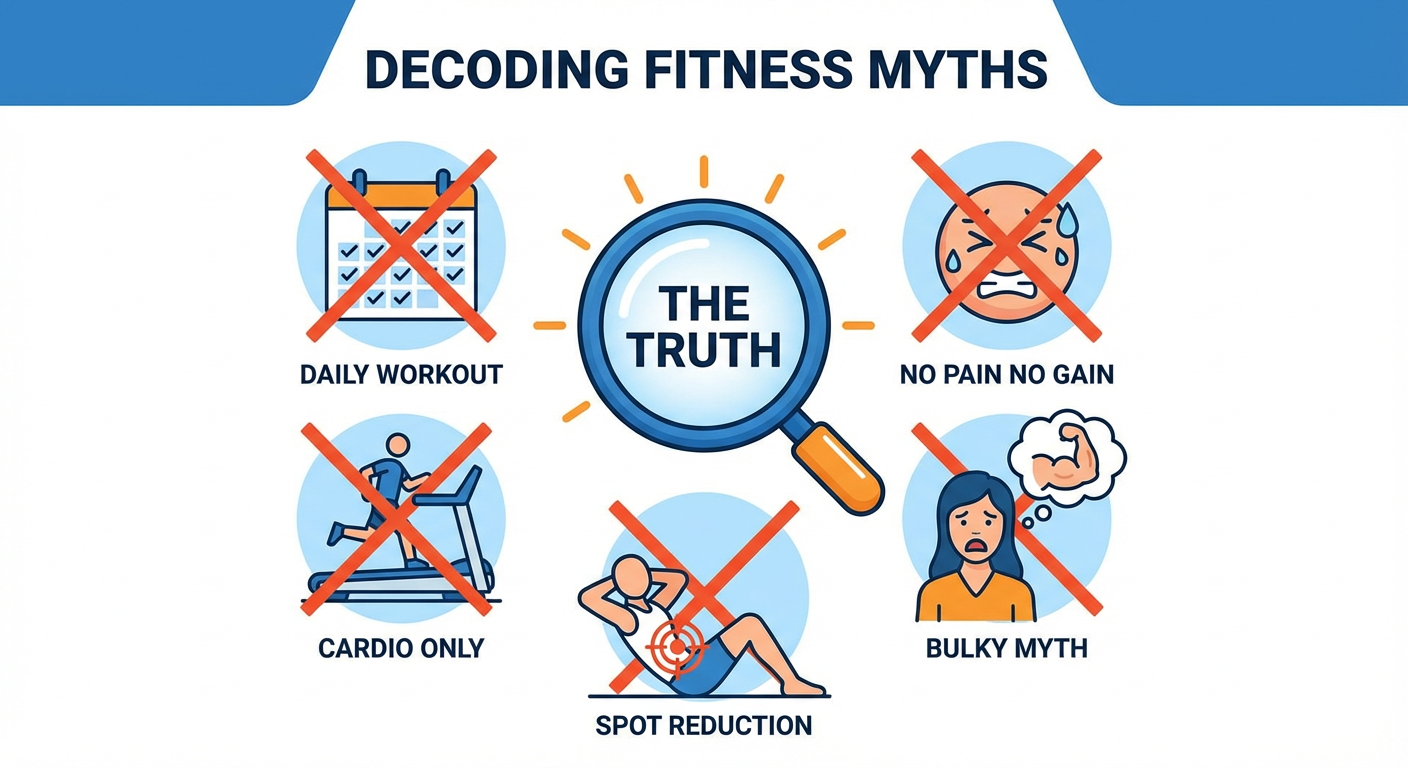
Starting a fitness journey can be an exciting yet daunting endeavor. With a plethora of information available, it’s easy for beginners to fall prey to common myths that can hinder their progress and even lead to discouragement. This article will debunk five of the most prevalent fitness myths and provide you with evidence-based guidance to kickstart your fitness journey effectively. By understanding the truth behind these misconceptions, you can build a sustainable and successful fitness routine.
Myth 1: You need to work out every day to see results.
One of the most common and damaging myths is the belief that daily, intense workouts are the only path to achieving fitness goals.
This “all or nothing” approach often leads to overtraining, burnout, and an increased risk of injury, ultimately derailing your progress.
The Truth: Rest and recovery are just as crucial as exercise for building strength and endurance.
Your muscles don’t get stronger during the workout itself, but during the recovery period that follows. Aim for 3-5 well-planned workout sessions per week, incorporating rest days to allow your body to repair and adapt.
On your “off” days, you can engage in active recovery, such as gentle stretching or walking, to keep your body moving without over-stressing it.
Myth 2: “No pain, no gain.”
The age-old adage “no pain, no gain” has led many beginners to believe that muscle soreness is the ultimate indicator of a productive workout. While some muscle soreness, known as Delayed Onset Muscle Soreness (DOMS), is normal when starting a new routine or increasing intensity, it’s not a reliable measure of an effective workout.
The Truth: Pain is your body’s signal that something is wrong. Pushing through sharp or persistent pain can lead to serious injuries.
While challenging yourself is important for progress, the focus should be on proper form and gradually increasing the intensity of your workouts. Instead of chasing soreness, pay attention to how you feel during your workout and aim for controlled, powerful movements.
Myth 3: Cardio is the best way to lose weight.
Many beginners equate weight loss solely with endless hours on the treadmill. While cardiovascular exercise is excellent for burning calories and improving heart health, it’s not the only piece of the weight-loss puzzle.
The Truth: A combination of cardiovascular exercise and strength training is the most effective approach for long-term, sustainable fat loss. Strength training builds lean muscle mass, which in turn boosts your resting metabolic rate, meaning you burn more calories even when you’re not exercising.
Don’t neglect the weights; incorporating strength training into your routine will help you achieve a more toned physique and a more efficient metabolism.
Myth 4: Lifting weights will make you bulky.
This myth is particularly prevalent among women and often prevents them from reaping the numerous benefits of strength training. The fear of developing large, “bulky” muscles is largely unfounded.
The Truth: Building significant muscle mass requires a very specific and intense training regimen, coupled with a high-calorie diet and, for women, overcoming hormonal limitations. For the average person, lifting weights will lead to a leaner, more toned appearance, not a bulky one.
The benefits of strength training are numerous, including increased bone density, improved metabolism, and enhanced overall health.
Myth 5: You can “spot reduce” fat from specific areas.
The idea that you can target fat loss in a particular area, like your stomach or thighs, by exercising that specific body part is a persistent and popular myth.
Doing hundreds of crunches, for example, will not magically melt away belly fat.
The Truth: Fat loss occurs throughout the entire body and is primarily achieved by creating a calorie deficit through a combination of a healthy diet and regular exercise. While you can’t control where your body loses fat from first, you can focus on a comprehensive fitness plan that includes both cardiovascular and strength training exercises to reduce overall body fat and reveal a more defined physique.
Conclusion
Embarking on a fitness journey is a marathon, not a sprint. By dispelling these common myths, you can approach your fitness goals with a more realistic and effective mindset. Remember to focus on consistency over intensity, listen to your body, and embrace a well-rounded routine that includes both cardiovascular exercise and strength training. With a solid foundation of knowledge and a commitment to sustainable habits, you are well on your way to achieving your fitness aspirations.