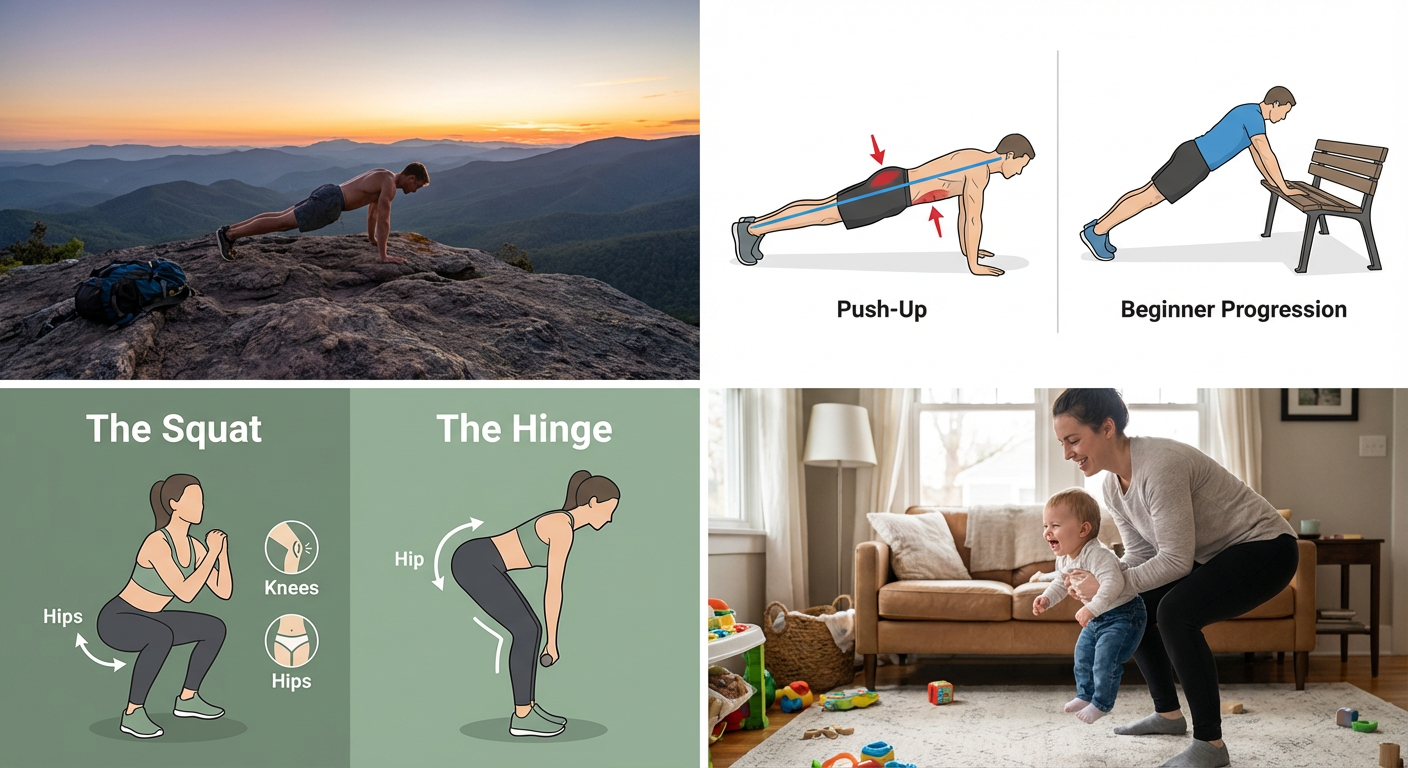
In the quest for lifelong strength and fitness, many believe that a gym membership and a collection of expensive equipment are non-negotiable. However, the most effective and accessible tool for building a resilient and capable body is the one you already possess: your own body. By mastering a few fundamental movements, you can unlock a lifetime of strength, mobility, and overall well-being. This approach, often referred to as calisthenics or bodyweight training, is not only effective but also incredibly convenient, allowing you to work out anywhere, anytime.
This article will delve into the four foundational movements that form the bedrock of a robust, functional, and injury-free physique.
The Power of Bodyweight Training
Before we explore the four foundational movements, it’s essential to understand the profound benefits of using your body as your primary resistance. Bodyweight training enhances not just muscular strength but also cardiovascular endurance, balance, flexibility, and body awareness.
It promotes the development of functional strength, which is the strength you use in your daily life for activities like carrying groceries, climbing stairs, or playing with your children.
Moreover, bodyweight exercises are inherently compound movements, meaning they engage multiple muscle groups and joints simultaneously. This holistic approach to training leads to a more balanced and coordinated physique, reducing the risk of muscle imbalances and injuries.
The 4 Foundational Movements
While there are countless bodyweight exercises, they can all be categorized into a few fundamental movement patterns. By focusing on these core patterns, you can ensure a well-rounded and effective training program. The four foundational movements that will be the focus of this guide are the push, the pull, the squat, and the hinge.
1. The Push: Building Upper Body Strength
The push is a fundamental upper body movement that involves pushing a weight (in this case, your own body) away from you. This movement primarily targets the chest, shoulders, and triceps.
The most iconic bodyweight push exercise is the push-up.
The Push-Up
The push-up is a versatile and highly effective exercise for developing upper body strength and core stability.
How to Perform a Basic Push-Up:
- Start in a high plank position with your hands slightly wider than your shoulders and your body in a straight line from your head to your heels.
- Engage your core and glutes to maintain a stable spine.
- Lower your body until your chest is close to the floor, keeping your elbows at a 45-degree angle to your body.
- Push back up to the starting position with power.
Progressions and Modifications:
- Beginner: If a full push-up is too challenging, you can start with incline push-ups (placing your hands on an elevated surface) or knee push-ups.
- Advanced: To increase the difficulty, you can progress to variations like diamond push-ups, archer push-ups, or even one-arm push-ups.
2. The Pull: For a Strong Back and Better Posture
The pull is the counterpart to the push and is crucial for developing a strong back, biceps, and improving posture.
Pulling movements involve drawing a weight (your body) towards a fixed point. The quintessential bodyweight pull exercise is the pull-up.
The Pull-Up
The pull-up is a challenging yet highly rewarding exercise that builds significant upper body pulling strength.
How to Perform a Basic Pull-Up:
- Grasp a pull-up bar with your hands slightly wider than your shoulders and your palms facing away from you.
- Hang from the bar with your arms fully extended.
- Engage your back and core muscles to pull your chest up towards the bar.
- Lower yourself back to the starting position with control.
Progressions and Modifications:
- Beginner: If you can’t perform a full pull-up, you can start with inverted rows (using a lower bar or suspension trainer) or use resistance bands to assist you.
- Advanced: For an extra challenge, you can add weight, try wide-grip pull-ups, or work towards a one-arm pull-up.
3. The Squat: The King of Lower Body Exercises
The squat is a fundamental movement pattern that is essential for lower body strength, mobility, and overall athleticism.
It mimics the natural human movement of sitting down and standing up and is a cornerstone of any effective strength training program.
The Bodyweight Squat
The bodyweight squat is a fantastic exercise for strengthening the quadriceps, hamstrings, and glutes.
How to Perform a Basic Bodyweight Squat:
- Stand with your feet shoulder-width apart, with your toes pointing slightly outwards.
- Keep your chest up and your back straight as you lower your hips as if you are sitting in a chair.
- Descend until your thighs are at least parallel to the floor, ensuring your knees track in line with your toes.
- Drive through your heels to return to the starting position.
Progressions and Modifications:
- Beginner: If you have difficulty with the range of motion, you can practice squatting to a chair or box.
- Advanced: To increase the intensity, you can progress to variations like jump squats, pistol squats (one-legged squats), or add external weight.
4. The Hinge: The Key to a Healthy Back and Powerful Glutes
The hip hinge is a fundamental movement that involves bending at the hips while maintaining a neutral spine.
It is crucial for developing strong glutes and hamstrings and for learning to lift objects safely, which can help prevent back injuries.
The Glute Bridge
For a foundational bodyweight hinge exercise, the glute bridge is an excellent starting point.
How to Perform a Glute Bridge:
- Lie on your back with your knees bent, your feet flat on the floor, and your arms at your sides with your palms down.
- Engage your glutes and lift your hips off the floor until your body forms a straight line from your shoulders to your knees.
- Squeeze your glutes at the top of the movement.
- Lower your hips back down to the starting position with control.
Progressions and Modifications:
- Beginner: Focus on perfecting the basic glute bridge form.
- Advanced: You can progress to single-leg glute bridges or add a weight across your hips for increased resistance. For a more dynamic hinge, you can perform kettlebell swings once you have access to equipment.
By consistently practicing and mastering these four foundational movements, you can build a strong, resilient, and functional body that will serve you for a lifetime. Remember to focus on proper form, listen to your body, and gradually progress the difficulty of the exercises as you get stronger. The gym is not a building; it’s you.