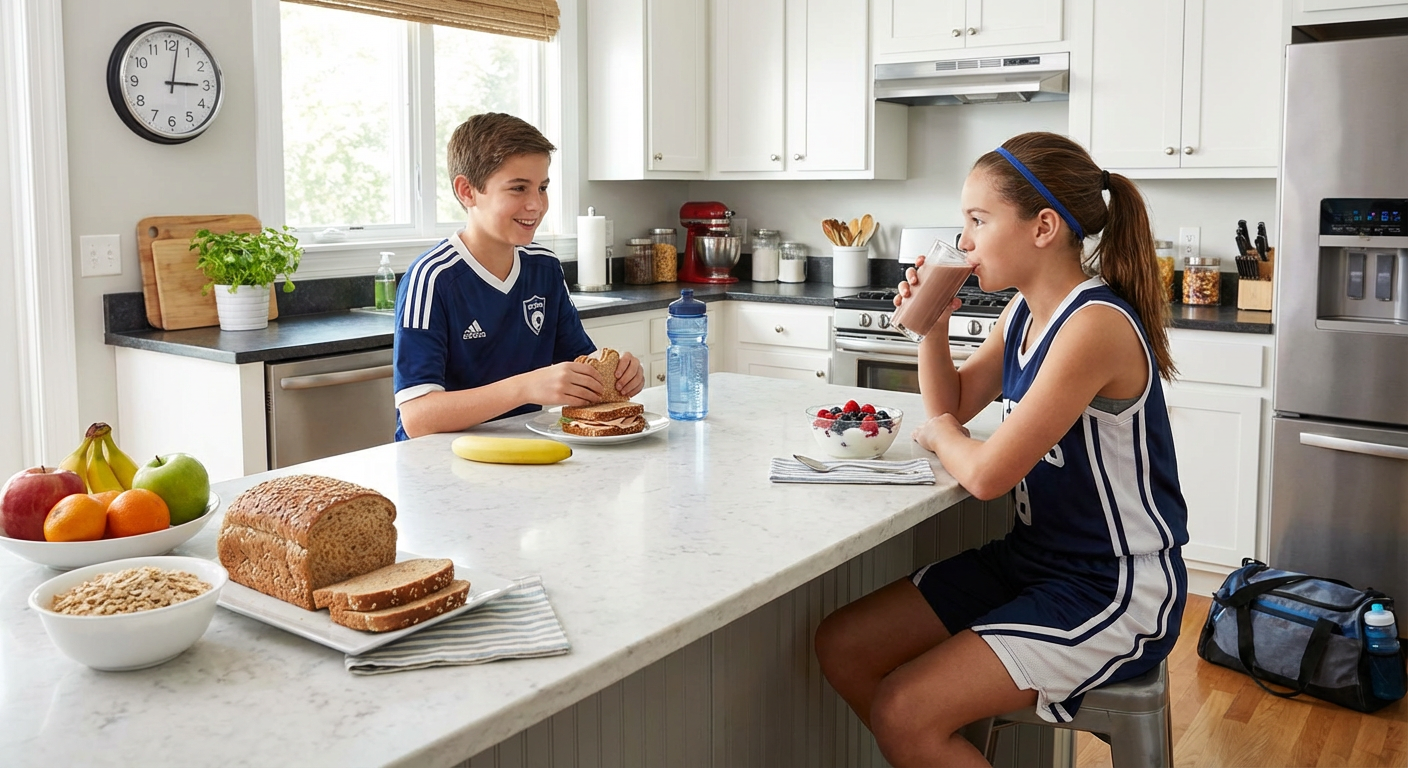
For many parents and coaches, the familiar rush of getting a young athlete to practice or a game is often accompanied by a nagging question: “Have they eaten the right thing?” This concern is valid because, for a young athlete, food is more than just sustenance—it’s the fuel that directly powers their energy, focus, and recovery. This guide provides a simple, science-backed approach to the two most critical meal times: before and after physical activity. Understanding what to eat before a game is crucial for any young athlete’s performance and health.
Little Athletes, Big Needs: Why Youth Sports Nutrition is Different
It’s a common misconception to view children as “mini-adults,” especially when it comes to nutrition. Their bodies are in a constant state of growth and development, a process that requires a significant amount of energy. When you add the physical demands of sports, their nutritional needs become even more unique. Unlike adults, young athletes are simultaneously fueling their athletic performance and their physical growth. This dual demand makes proper nutrition not just beneficial, but essential for their overall health and athletic progress.
The Pre-Game Power-Up: What to Eat BEFORE a Game or Practice
The primary goal of a pre-game meal is to top off the body’s energy stores, known as glycogen, without causing an upset stomach. This ensures the young athlete has the stamina to perform at their best from the first whistle to the last.
Timing is Everything: The 3-Hour vs. 1-Hour Rule
The timing of a pre-game meal is just as important as its content. Here’s a simple breakdown:
| Time Before Activity | Meal Composition |
|---|---|
| 2-3 Hours Before | A balanced meal rich in complex carbohydrates, with a moderate amount of lean protein, and low in fat and fiber. |
| 30-60 Minutes Before | A smaller, easily digestible snack for a quick and accessible energy boost. |
The Perfect Pre-Game Meal Formula
To ensure sustained energy and muscle readiness, a pre-game meal should consist of:
- Complex Carbohydrates: These are the body’s primary fuel source. Foods like oatmeal, whole-wheat bread, and brown rice provide a slow and steady release of energy, preventing the dreaded “crash” that can come from sugary snacks.
- Lean Protein: Protein is essential for preparing muscles for the work ahead. Good sources include eggs, yogurt, and turkey.
Winning Pre-Game Meal & Snack Ideas (The “What to Eat” List)
Here are some practical and kid-friendly options for your young athlete’s pre-game fuel:
2-3 Hours Before a Game or Practice:
- Oatmeal with berries
- Turkey sandwich on whole wheat bread
- Grilled chicken with sweet potato
- Whole wheat pasta with a tomato-based sauce and lean ground chicken
- Scrambled eggs with a side of whole-wheat toast
30-60 Minutes Before a Game or Practice:
- A banana
- A handful of pretzels
- A small, low-sugar granola bar
- A small bowl of Greek yogurt with a sprinkle of granola
- Whole grain crackers with a slice of cheese
The Recovery Window: What to Eat AFTER a Game or Practice
The post-game meal is just as crucial as the pre-game one. Its main purpose is to replenish depleted energy stores and repair muscle tissue that was broken down during exercise. The 30 minutes following intense activity is the ideal window to start this process.
The 3 R’s of Recovery: Replenish, Rebuild, and Rehydrate
A successful recovery meal focuses on three key elements:
- Replenish: With fast-acting carbohydrates to refill energy stores.
- Rebuild: With quality protein to repair and build muscle.
- Rehydrate: With fluids and electrolytes lost through sweat.
Optimal Post-Game Recovery Meal & Snack Ideas
Here are some excellent choices for post-game recovery:
- Chocolate milk: Often called the perfect recovery drink due to its ideal carbohydrate-to-protein ratio.
- Greek yogurt with fruit: Provides a great combination of protein and carbohydrates.
- A smoothie with fruit and protein powder: A quick and easy way to get in essential nutrients.
- Scrambled eggs with toast: A classic post-activity meal that delivers a solid dose of protein and carbs.
- A turkey and cheese sandwich on whole wheat bread: A simple and effective recovery option.
Don’t Forget Hydration: The Unsung Hero
Hydration is a critical, yet often overlooked, component of a young athlete’s nutrition plan. Even mild dehydration can significantly impact performance, leading to decreased strength, energy, and coordination.
- Drink Throughout the Day: Encourage your child to drink water consistently, not just during practice.
- Before, During, and After: They should drink water before, every 15-20 minutes during, and after physical activity to replace lost fluids.
- Check Hydration Status: A simple way to monitor hydration is by checking urine color. Pale yellow, like lemonade, indicates good hydration, while a darker yellow, like apple juice, suggests dehydration. For most young athletes, plain water is the best choice for hydration. Sports drinks, which often contain a lot of sugar, should generally be avoided unless the child is engaging in more than an hour of vigorous exercise.
Caution Zone: Foods to Avoid Right Before a Game
To prevent stomach upset and sluggishness, it’s wise to limit or avoid certain foods in the 2-3 hours leading up to a game or practice:
- High-fat, greasy foods: French fries, chips, and other fried foods take a long time to digest and can cause discomfort.
- Excessively sugary drinks and snacks: Sodas and candy provide a quick burst of energy followed by a crash, which is not ideal for sustained performance.
- Very high-fiber foods: While fiber is generally healthy, consuming large amounts right before exercise can lead to gas and bloating.
Conclusion
Fueling a young athlete for success doesn’t have to be complicated. By focusing on the right balance of complex carbohydrates and lean protein, paying close attention to timing, and never underestimating the importance of hydration, you can empower your child to perform at their best. Remembering the 3 R’s of Recovery—Replenish, Rebuild, and Rehydrate—will ensure they bounce back quickly and stay healthy throughout their athletic journey. With this knowledge, you can feel confident in your ability to provide your future champion with the fuel they need to thrive.