The scene is all too familiar. You’ve spent time preparing a healthy, balanced meal. At the center of the plate sits a small, innocent-looking pile of green beans, broccoli, or peas. And then it begins: the standoff. Your child’s face crumples in disgust. The head-shaking starts. The dreaded “yuck” is uttered. You feel your frustration rising, mixed with a healthy dose of worry. Are they getting enough nutrients? Why is this such a battle every single night?
If this sounds like your dinner table, take a deep breath and know this: you are not alone, and you are not failing. This is an incredibly common developmental phase for young children. The challenge to get kids to eat vegetables is a universal parenting struggle. But what if you could transform mealtimes from a warzone into a playground for the senses? Forget the pressure and the pleading. We’re about to explore five battle-tested, fun, and creative strategies that will help turn that “yuck” into a tentative “yum.”
The Psychology of a Picky Eater: Why Do Kids Reject Veggies?
Before we dive into the fun stuff, it helps to understand what’s going on in your child’s brain. Their rejection of vegetables isn’t a personal attack on your cooking! There’s real science behind it.
- Neophobia (Fear of New Foods): From an evolutionary standpoint, this was a survival mechanism. Toddlers were programmed to be wary of new, potentially poisonous plants (which many vegetables are). Their brains are hardwired to prefer the safe, familiar tastes of sweet and salty foods.
- Sensitivity to Bitterness: Kids have more taste buds than adults, and they are particularly sensitive to bitter flavors. Many vegetables, like broccoli and spinach, have a subtle bitterness that can be overwhelming for their super-powered palates.
- A Desire for Control: The toddler and preschool years are all about establishing independence. The dinner plate is one of the few arenas where they have absolute control. Saying “no” to the carrots is a simple, effective way for them to assert their autonomy.
Understanding this can shift your perspective from frustration to empathy. When your toddler won’t eat vegetables, they aren’t trying to be difficult; they are being a toddler. Our job is to make the new and unfamiliar feel safe, fun, and delicious.
Method 1: Become a “Veggie Marketing” Genius
Think about how your child’s favorite cartoons and toys are marketed to them—with bright colors, fun names, and exciting stories. We can use the same tactics for vegetables! It’s time to rebrand the greens and make them irresistible. This is all about making vegetables fun.
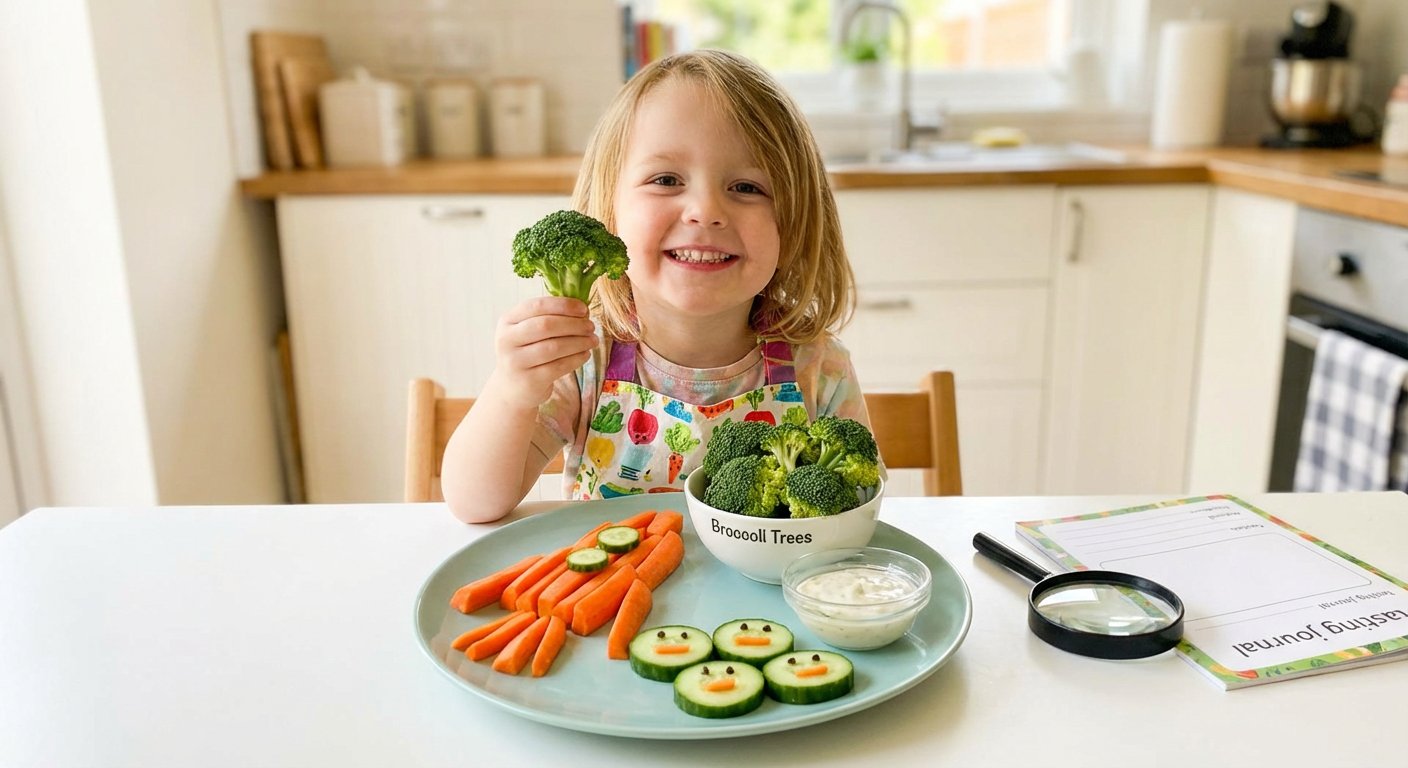
Instead of “eat your broccoli,” try presenting them with a plate of “Dinosaur Trees” or “Tiny Trees for Giants.” Carrots can be transformed from a boring stick into “X-Ray Vision Carrots” that will help them see in the dark or find hidden treasures. A sprinkle of parmesan on green beans? That’s “Fairy Dust”!
Create simple stories. Maybe the “Sweet Potato Power-Ups” will give them the energy to run faster than their favorite superhero. The possibilities are endless. This isn’t about deceiving them; it’s about sparking their imagination and making the food on their plate a part of their world of play.
Actionable Ideas:
- Broccoli & Cauliflower: Tiny Trees, Brain Food, Puffy Clouds
- Carrot Sticks: Rocket Ships, Gold Coins, Bunny Snacks
- Spinach: Super-Strength Leaves, Green Monster Fuel
- Bell Pepper Strips: Rainbow Swords, Traffic Lights
Method 2: Enlist Them as Your Sous-Chef
One of the most effective ways to get a child to try a new food is to have them help prepare it. When they have a hand in the process, they feel a sense of ownership and pride. They’re not just being served a mysterious pile of greens; they’ve been a part of its journey to the plate.
This doesn’t mean you need to let your three-year-old handle a sharp knife. The tasks can be simple and age-appropriate. Involving them in creating kid-friendly vegetable recipes is a game-changer.
Let them be your little sous-chef. At the grocery store, let them pick out a new vegetable to try—give them two or three options you’re happy with. At home, they can help wash the lettuce in the salad spinner (a guaranteed hit!), stir a cool sauce, sprinkle herbs, or even just push the button on the blender (with supervision, of course). The more they touch, smell, and interact with the raw ingredients, the less intimidating those ingredients will be when they appear on their dinner plate.
Age-Appropriate Kitchen Tasks:
- Toddlers (2-3): Washing vegetables, tearing lettuce, stirring cold ingredients, mashing soft foods (like avocado).
- Preschoolers (4-5): Cracking eggs, using a kid-safe knife to cut soft foods (like bananas or cucumbers), measuring and pouring ingredients, whisking.
Method 3: The Magic of Dips, Sauces, and Smoothies
This is the “stealth health” approach, but we’ll give it a positive spin. While our main goal is to help kids learn to love vegetables for what they are, there’s absolutely no shame in the hiding vegetables in food game, especially when you’re starting out. Dips, sauces, and smoothies are your secret weapons.
A dollop of a dip they already love can make a raw veggie stick much more appealing. And blending vegetables into a delicious pasta sauce or a sweet smoothie is a fantastic way to boost their nutrient intake while their palate is still adjusting.
Here’s a simple recipe to get you started:
Hidden Spinach & Berry “Monster” Smoothie
Ingredients:
- 1 large handful of fresh spinach
- 1 cup of frozen mixed berries
- 1/2 banana
- 1/2 cup of plain yogurt or milk (dairy or non-dairy)
- 1 teaspoon of honey or maple syrup (optional)
Instructions:
- Add the spinach and yogurt/milk to the blender first. Blend until the spinach is completely liquefied.
- Add the frozen berries, banana, and sweetener (if using).
- Blend again until smooth and creamy.
- Serve immediately and call it a “Purple Power Potion” or “Monster Smoothie”! The sweet berries and banana completely mask the taste of the spinach.
Don’t forget the power of healthy dips like hummus, guacamole, or a simple yogurt-based ranch. Serving “Broccoli Trees” with a side of “Ranch Snow” for dipping makes it an interactive and tasty experience.
Method 4: Gamify the Greens
For many picky eaters vegetables are the ultimate enemy. The pressure to “just take one bite” can create a cycle of anxiety and refusal. So, let’s remove the pressure entirely and turn it into a game. The rule of the game is simple: keep it fun, and no-pressure environment is the mantra.
Create an “Eat the Rainbow” chart. Each day, your child can put a sticker on the chart for every color of fruit or vegetable they eat. A red sticker for strawberries, a green one for cucumber, an orange one for carrots, and so on. The goal isn’t to clean their plate but to simply try a variety of colors throughout the week.
Another idea is “Veggie Bingo.” Create a simple bingo card with pictures of different vegetables. Whenever they try one, they get to mark it off. Getting a “bingo” could be rewarded with something non-food related, like an extra bedtime story or a trip to the park. You can also get creative with food art—using veggie sticks, cherry tomato halves, and cucumber slices to make funny faces or scenes on their plate.
Method 5: The “Food Scientist” Approach
This method gives control back to your child and appeals to their natural curiosity. Instead of presenting a food to be eaten, present it as an object to be studied. They are now a “Food Scientist,” and their job is to analyze the specimen.
Introduce the one-bite rule, but with a twist. They are not forced to swallow it. Their only job is to take one bite to investigate its properties. Ask them questions:
- Texture: Is it crunchy, soft, squishy, or smooth?
- Sound: What sound does it make when you bite it? A loud crunch or a quiet squish?
- Flavor: Is it sweet, salty, or something else?
You can even create a “Tasting Journal.” Create a simple page with the name of the food and three faces: a smiley face, a neutral face, and a frowny face. They can circle the face that matches their opinion. This validates their feelings, gives them agency, and makes the act of trying something new a low-stakes, analytical process rather than a high-pressure command.
Consistency is Key: What to Do When It Doesn’t Work Immediately
It’s important to manage your expectations. You might serve “X-Ray Vision Carrots” to thunderous applause one night, only to have them rejected the next. This is normal. The key is consistency and patience.
Experts say it can take 10-15 exposures for a child to accept a new food. That means you may have to serve broccoli fifteen different times before your child willingly takes a bite. The most important part is to keep offering it without pressure. Put a small piece on their plate, and don’t make a big deal if they don’t eat it.
Your own attitude matters more than you think. Lead by example. Let your kids see you eating and genuinely enjoying a wide variety of vegetables. Say things like, “Wow, these roasted asparagus are so crispy and delicious!” Your positive modeling is one of the most powerful tools you have.
The Path to Healthy Eating
Transforming a picky eater doesn’t happen overnight. It’s a journey filled with small victories, occasional setbacks, and a whole lot of patience. By rebranding your veggies, involving your child in the kitchen, using the magic of dips, gamifying the experience, and empowering them to be a food scientist, you are laying a positive foundation for a lifetime of healthy eating for kids.
Remember, your primary goal is to raise a child who has a healthy and happy relationship with food. Ditch the pressure, embrace the creativity, and focus on positive, shared experiences around the dinner table. You’ve got this.