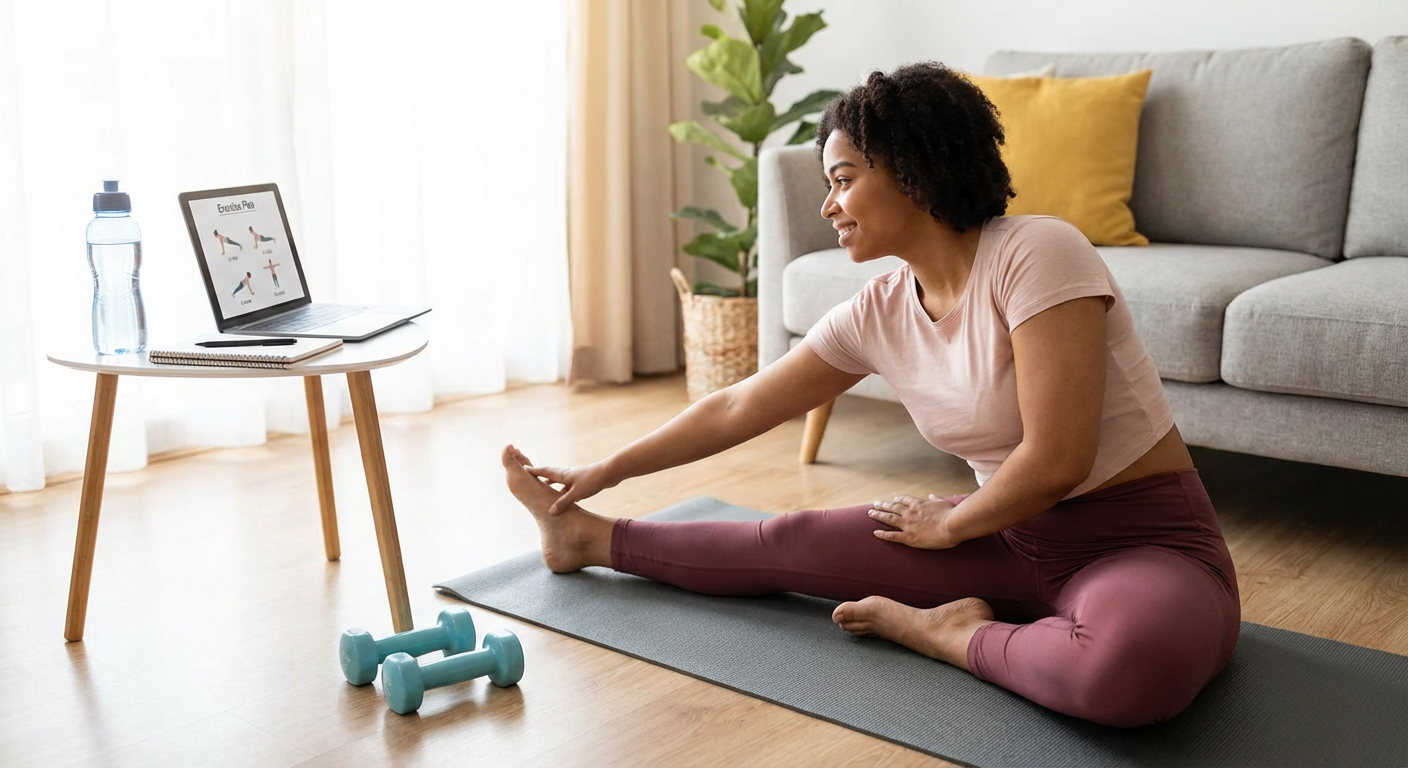
Embarking on a beginner fitness journey can feel like standing at the base of a massive mountain. You see the peak—health, energy, confidence—but the path is shrouded in confusing advice, intimidating gym equipment, and the paralyzing fear of doing it all wrong. If you’ve ever wondered how to start working out for beginners without getting hurt or burning out, you’re in the right place. This is your blueprint. Forget the “go hard or go home” mentality. Here, we focus on how to start fitness without injury, building a foundation that will last a lifetime.
Why Starting Right is Everything: The Mindset Shift
Before you lift a single weight or take a single step, the most important work happens in your mind. The fitness industry often sells an “all or nothing” myth that leaves beginners feeling defeated before they even start. It’s time for a mindset shift.
- Debunk the “All or Nothing” Myth: A 20-minute walk is infinitely better than a zero-minute workout. Did you only have time for two exercises instead of four? That’s a win. Stop believing that a workout only “counts” if it’s an hour long and leaves you exhausted.
- Embrace Consistency Over Perfection: The secret to long-term results isn’t one perfect, brutal workout. It’s the habit of showing up consistently, even on days you don’t feel 100%. A sustainable routine you can stick to is far more powerful than a perfect one you quit after a week.
- Redefine Success: For now, success isn’t about the number on the scale or the size of your jeans. Success is packing your gym bag. It’s rolling out your yoga mat. It’s finishing your planned workout, no matter how modified. Celebrate the act of showing up for yourself.
Step 1: Defining Your “Why” & Setting SMART Goals
Motivation that lasts comes from a deeply personal place. “Getting fit” is too vague. You need a powerful, specific “why.” Is it to have more energy to play with your kids? To improve your mood and mental health? To feel strong and capable in your daily life? Pinpoint your personal reason—this is the fuel that will get you through the tough days.
Once you have your “why,” it’s time for setting fitness goals that are SMART: Specific, Measurable, Achievable, Relevant, and Time-Bound.
| Vague Goal | SMART Goal |
|---|---|
| “I want to get fit.” | “I will walk briskly for 30 minutes, 3 times per week, for the next month.” |
| “I need to eat better.” | “I will include a source of protein with every meal for the next two weeks.” |
| “I should be stronger.” | “I will perform my beginner bodyweight routine twice a week, aiming to complete all sets.” |
Step 2: The Non-Negotiables: Warm-Up, Cool-Down, and Form
This section is the most critical to start fitness without injury. Do not skip these steps. They prime your body for movement and help it recover, dramatically reducing your risk of getting hurt.
The 5-Minute Dynamic Warm-Up
A dynamic warm-up uses movement to increase blood flow and activate the muscles you’re about to use. Perform each movement for 30-60 seconds.
- Arm Circles: Stand with feet shoulder-width apart and make large circles forward with your arms, then reverse.
- Leg Swings: Hold onto a wall for support and swing one leg forward and back, then side to side. Repeat on the other leg.
- Torso Twists: Stand with your feet wide and arms out. Gently twist your upper body from side to side.
- Cat-Cow: Start on your hands and knees. Inhale as you drop your belly and look up (Cow). Exhale as you round your spine and tuck your chin (Cat).
The Importance of Proper Form
Proper form ensures you’re working the intended muscles and protecting your joints. Rushing through exercises with bad form is ineffective and dangerous. Start with bodyweight and use a mirror or record yourself to check your form.
The Essential Cool-Down & Stretch
After your workout, your muscles are warm and pliable. A cool-down involving static stretching (holding a stretch for 20-30 seconds) can help improve flexibility and reduce post-workout tightness.
Step 3: Your First Week: A Sample, Safe Workout Plan
Here is a sample beginner workout plan at home designed to be balanced and effective. The goal is to get your body moving and build confidence.
| Day | Activity | Workout Details |
|---|---|---|
| Day 1 | Full Body Basics | Bodyweight Squats: 2 sets of 10 reps Knee Push-ups: 2 sets of 8 reps (or Wall Push-ups) Dumbbell Rows (using water bottles/cans): 2 sets of 10 reps per arm Plank: Hold for 20 seconds |
| Day 2 | Active Recovery | 20-minute brisk walk, gentle yoga, or stretching. |
| Day 3 | Full Body Repeat | Repeat the Day 1 workout. Try to add 1-2 more reps to each set if you feel strong enough. |
| Days 4-7 | Rest / Light Activity | Rest is crucial for recovery. A light walk is okay if you feel up to it. |
Modifications are your friend! If a knee push-up is too hard, do them against a wall. If a full squat is too much, place a chair behind you and squat down until you tap it, then stand back up.
Step 4: Fueling Your Start: Nutrition Basics for Energy
Nutrition for beginners shouldn’t be about restrictive diets. Think of it as providing your body with the high-quality fuel it needs to perform and recover.
- Stay Hydrated: Water is essential for everything from muscle function to energy levels. Sip it consistently throughout the day.
- Include Protein in Your Meals: Protein is the building block for muscle repair. Aim to include a source like chicken, fish, beans, or tofu with your meals.
- Choose Whole Foods for Energy: Foods like fruits, vegetables, and whole grains provide sustained energy, unlike sugary snacks that lead to a crash.
Overcoming Common Beginner Hurdles
Every beginner faces a few bumps in the road. Here’s how to navigate them.
- “What if I’m too sore?” This is normal. The best remedies are gentle movement (like walking), staying hydrated, and getting enough sleep.
- “I feel self-conscious at the first time at the gym.” You are not alone. Try going at off-peak hours, have a plan written down, and use headphones to create your own personal bubble.
- “How do I stay motivated?” Track your progress! Did you add one more rep? Did you hold a plank for 5 more seconds? These are victories!
Your Roadmap Beyond the First Month
This blueprint is just the start. Once you feel comfortable (after 3-4 weeks), you can start to think about gradual progression: adding sets, increasing weight, or trying a beginner’s class. The most important rule is to listen to your body and enjoy the process of getting stronger.
Share your first week’s goal in the comments below—we’re here to cheer you on!