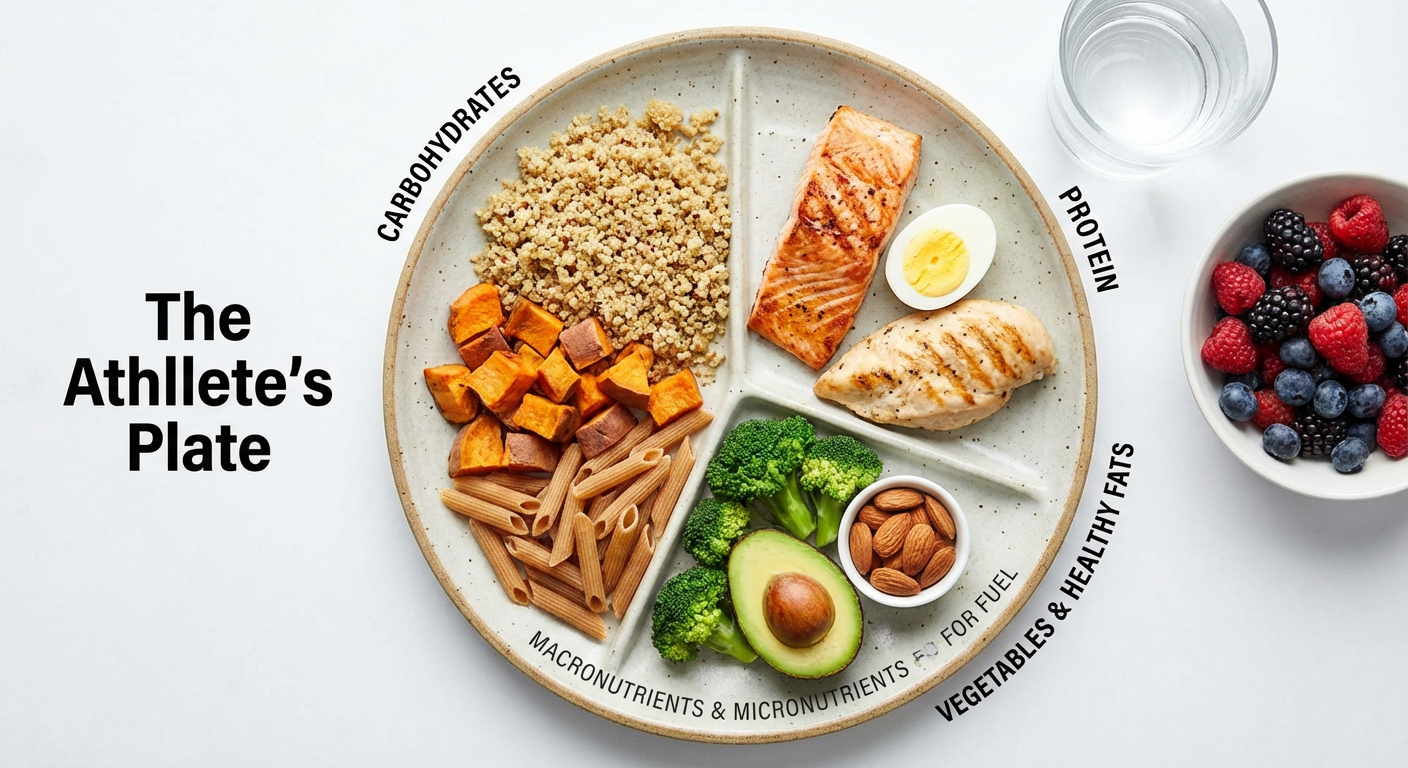
For any athlete, from the weekend warrior to the elite professional, the quest for peak performance is a constant pursuit. While rigorous training schedules and mental conditioning are fundamental pillars of success, the fuel you provide your body is the catalyst that transforms hard work into tangible results. This is where the concept of “The Athlete’s Plate” comes into play—a powerful, visual framework for understanding your nutritional needs. This isn’t about restrictive dieting; it’s about strategic eating. This deep dive will dissect the critical roles of both macronutrients and micronutrients, showing you how to build the perfect plate to optimize your athletic performance, enhance recovery, and unlock your true potential.
Understanding the Athlete’s Plate: A Visual Guide
Imagine your dinner plate divided into sections. The size of these sections changes based on the intensity of your training day. This is the core principle of “The Athlete’s Plate,” a model developed to simplify sports nutrition.
- Easy Training Day/Rest Day: Half your plate is filled with fruits and vegetables, a quarter with lean protein, and a quarter with whole-grain carbohydrates. This composition focuses on nutrient density and recovery.
- Moderate Training Day: The carbohydrate section expands to about a third of the plate, slightly reducing the fruit and vegetable portion, while lean protein remains at a quarter. This provides additional fuel for athletes to match the increased energy expenditure.
- Hard Training Day/Competition: On your most demanding days, carbohydrates become the star, filling half the plate to ensure your glycogen stores are fully loaded. The remaining half is split between lean protein and vegetables.
This visual model is a simple yet effective starting point for mastering your fueling for performance strategy.
The Power Trio: Deconstructing Macronutrients for Optimal Fuel
Macronutrients are the nutrients your body needs in large amounts to function and provide energy. For an athlete, understanding the specific role of each “macro”—carbohydrates, protein, and fat—is non-negotiable.
Carbohydrates: The High-Octane Fuel for Athletes
Often misunderstood in mainstream diet culture, carbohydrates for energy are the most critical macronutrient for any athlete. They are the body’s most accessible and efficient fuel source, broken down into glucose and stored as glycogen in your muscles and liver. During exercise, your body calls upon these glycogen stores to power every movement.
Depleting your glycogen leads directly to fatigue, a loss of skill, and reduced work capacity—the dreaded “bonk” or “hitting the wall.” A diet rich in carbohydrates ensures you start every session with a full tank. Focus on complex carbohydrates that provide a slow, sustained release of energy.
- Excellent Sources: Oatmeal, brown rice, quinoa, sweet potatoes, whole-wheat bread and pasta, beans, and lentils.
- Simple Sugars: While whole foods are best, simple sugars from sports drinks, gels, or even fruit can be strategically used during long-duration exercise for a rapid energy boost.
Your daily intake should be tailored to your training load, but a general guideline for serious athletes is 5-10 grams of carbohydrates per kilogram of body weight.
Protein: The Master Builder for Repair and Strength
If carbohydrates are the fuel, think of protein for muscle recovery as the master construction crew. Every stride, lift, and jump creates microscopic tears in your muscle fibers. Protein provides the essential amino acids—the building blocks—required to repair this damage, leading to muscle adaptation, increased strength, and improved muscle growth.
Ignoring protein intake is a critical mistake that can lead to poor recovery, muscle loss, and an increased risk of injury. Consuming adequate protein, especially in the window following a workout, kickstarts the repair process, ensuring you come back stronger for your next session.
- High-Quality Sources: Lean meats (chicken, turkey), fish (like salmon, rich in omega-3s), eggs, Greek yogurt, cottage cheese, and milk.
- Plant-Based Power: Tofu, tempeh, edamame, lentils, chickpeas, and high-quality plant-based protein powders are excellent options for vegan and vegetarian athletes.
Athletes have elevated protein needs, typically requiring 1.2 to 2.2 grams of protein per kilogram of body weight per day to support their demanding training and recovery cycles. This makes understanding post-workout nutrition a cornerstone of any effective plan.
Healthy Fats: The Essential Energy Reserve and Functional Nutrient
Fat is the third crucial macronutrient and an essential component of “The Athlete’s Plate.” It serves as a dense energy source, vital for lower-intensity, long-duration activities where the body is less reliant on immediate carbohydrate stores.
Beyond energy, healthy fats for athletes play a critical role in absorbing fat-soluble vitamins (A, D, E, K), producing hormones, and reducing inflammation—a key factor in recovery. The goal isn’t to avoid fat but to choose the right types.
- Focus on Unsaturated Fats: Avocados, nuts (almonds, walnuts), seeds (chia, flax), olive oil, and fatty fish are packed with benefits.
- Limit Saturated and Trans Fats: While not to be eliminated entirely, fats from fried foods, processed snacks, and fatty red meats should be minimized as they can promote inflammation.
Beyond the Macros: The Critical Role of Micronutrients
While they don’t provide energy, micronutrients—vitamins and minerals—are the unsung heroes of sports nutrition. They act as the body’s spark plugs, enabling hundreds of metabolic reactions essential for everything from energy production to bone health and oxygen transport. A deficiency in even one key micronutrient can create a bottleneck that severely hampers athletic performance.
Key Vitamins for Athletes
- B Vitamins (B1, B2, B3, B6, B12): This group is the engine of energy production, playing a direct role in metabolizing carbohydrates and protein into usable fuel.
- Vitamin D: Crucial for calcium absorption and bone health, as well as immune function. Many athletes are deficient, making it a critical vitamin to monitor.
- Antioxidants (Vitamins C and E): Intense exercise creates oxidative stress. These vitamins help combat that stress, reduce cellular damage, and support a robust immune system.
Essential Minerals for Performance
- Iron: Absolutely vital for creating hemoglobin, the protein in red blood cells that transports oxygen to working muscles. Low iron leads directly to fatigue and diminished endurance.
- Calcium: Famous for its role in bone strength, calcium is also essential for muscle contractions and nerve function.
- Magnesium: Involved in over 300 biochemical reactions, including energy metabolism, muscle function, and blood sugar control.
- Sodium and Potassium (Electrolytes): These are critical for fluid balance and nerve signaling. They are lost through sweat, and replenishing them is a key part of any hydration strategy.
Hydration: The Unseen Nutrient on the Athlete’s Plate
You can have a perfect balance of macronutrients and micronutrients, but it will all be for naught without proper hydration. Water is arguably the most important nutrient for performance. A dehydration level of just 2% of your body weight can cause a significant decrease in aerobic performance, impair cognitive function, and increase perceived exertion.
Your hydration strategy must be proactive, not reactive. If you wait until you feel thirsty, you’re already dehydrated. Sip water consistently throughout the day and pay close attention to your hydration status before, during, and after training, replenishing lost fluids and electrolytes as needed.
Putting It All Together: Customizing Your Athlete’s Plate
The principles discussed provide a powerful foundation, but the ultimate “The Athlete’s Plate” is the one that is customized for you. Consider your sport, training intensity, body composition goals, and personal preferences. Use this guide not as a rigid set of rules, but as a dynamic toolkit to build a nutritional strategy that makes you feel strong, recover quickly, and perform at your absolute best. By mastering your plate, you master a critical component of your athletic journey, providing the high-quality fuel for athletes that your body deserves.
cwbwop